

Applied Learning Programme
Applied Learning Programme
Applied Learning Programme (ALP) at CHIJ Our Lady Queen of Peace
The Applied Learning Programme (ALP) at CHIJ OLQP offers students authentic and hands-on learning experiences that integrate interdisciplinary knowledge and develop critical metacognitive skills. Through initiatives like the STEM in Sustainability programme and Makerspace, students build essential competencies in computational, inventive, and critical thinking.
STEM in Sustainability
Aligned with the United Nations Sustainable Development Goals and Singapore’s Green Plan, STEM in Sustainability engages Primary 3, 4 and 6 students in solving real-world challenges. By applying programming concepts through tools like Micro:bit, students explore innovative solutions while gaining practical skills.
Programme Highlights:
Primary 3: STEM in Food Sustainability
Primary 3 students explore food sustainability through hands-on STEM learning
experiences. They design and build a humidity sensor and a self-watering
planter to optimise plant growth, developing creative problem-solving and
design-thinking skills.
Aligned with the Science topic Life Cycle of Plants, students participate in the Young Farmers’ Programme, where they grow vegetables in the school’s garden plots. Through planting and harvesting kangkong, they gain first-hand experience in sustainable food production and deepen their understanding of Singapore’s 30 by 30 food resilience plan.
To further extend their learning on sustainability, students also explore ways to reduce food waste by creating their own citrus enzyme cleaners using orange peels, reinforcing the importance of resourcefulness and environmental responsibility.
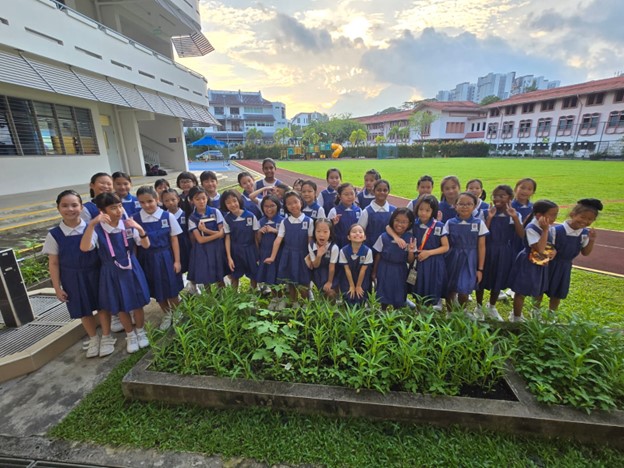
Growing Kang Kong
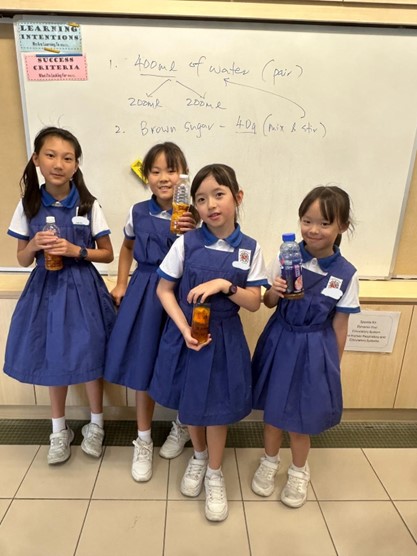
Students holding the citrus enzyme cleaners they made
Primary 4 STEM Programme: Energy Sustainability
The Primary 4 STEM Programme focuses on developing students’ understanding of energy sustainability, with an emphasis on Singapore’s energy challenges and the need for responsible energy use. Students apply their knowledge of energy concepts to identify and address real-world energy sustainability issues within the school context.
Using the Design Thinking framework and basic coding skills, students collaborate to design and create interactive digital games that promote energy-saving behaviours. Through this process, students develop critical, adaptive, and inventive thinking skills, strengthen their digital literacy, and learn to communicate their ideas confidently by sharing and showcasing their creations with peers.
Primary 6 STEM Programme: Tackling Climate Change
The Primary 6 STEM Programme focuses on climate action, aligned with the United Nations Sustainable Development Goal 13 (Climate Action). Students deepen their understanding of pressing climate issues such as rising global temperatures, extreme weather events, and biodiversity loss, examined from both Singapore and global perspectives.
Through the Design Thinking framework, students conceptualise and develop innovative physical and/or digital prototypes that propose practical and impactful solutions to mitigate climate challenges. The programme emphasises critical thinking, creativity, and collaborative problem-solving, empowering students to apply STEM knowledge.
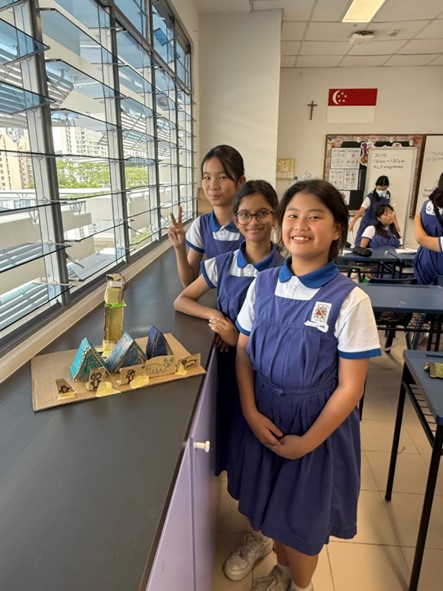
Makerspace@OLQP
Maker Education at CHIJ OLQP provides students with opportunities to collaborate and solve problems through hands-on exploration and free play. Makerspace@OLQP offers a dedicated learning space where students can engage in the design thinking process, brainstorming ideas, creating prototypes, and testing their solutions during recess. These exciting activities spark the joy of learning and inspire students to think critically and creatively to solve problems in innovative ways.
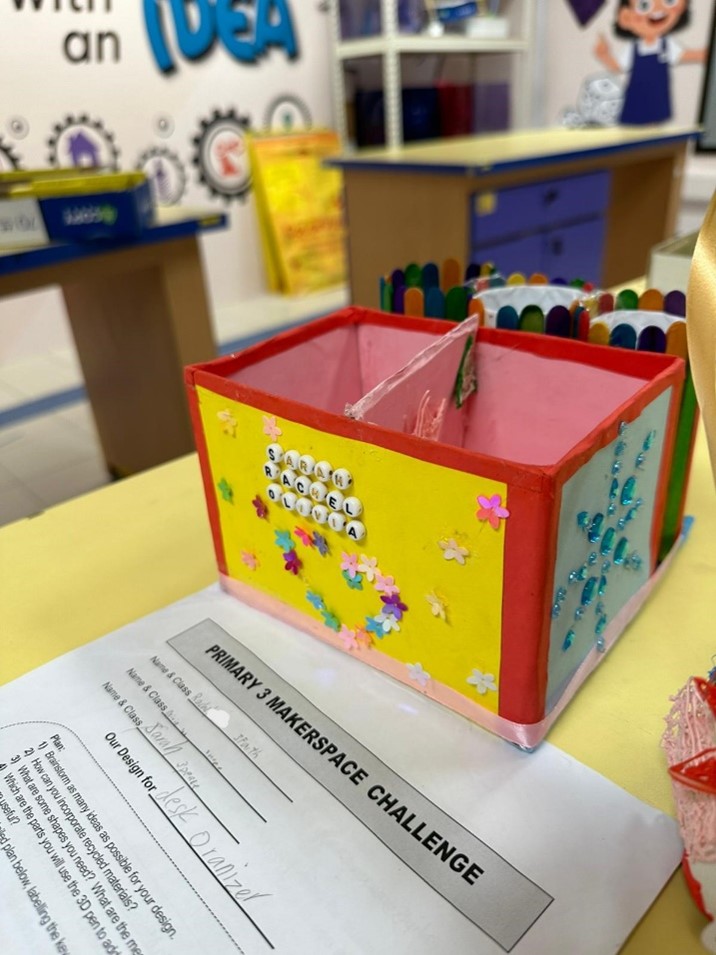
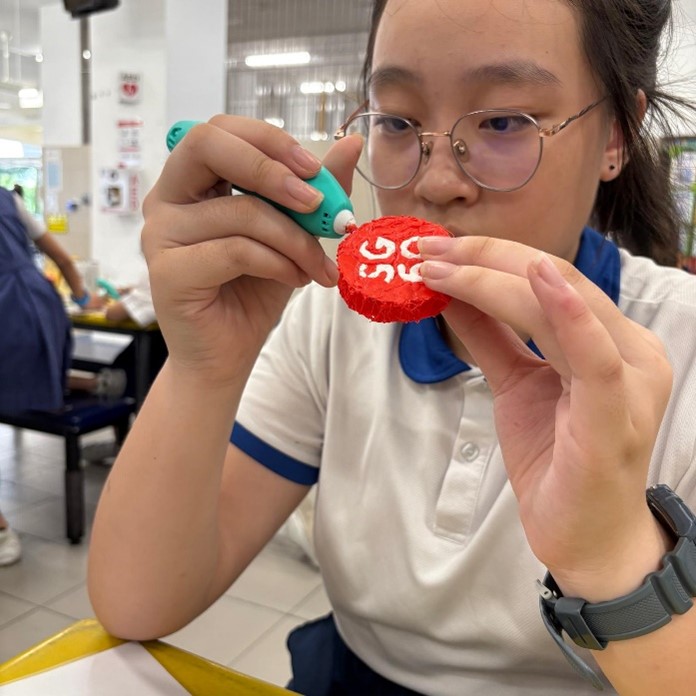
Primary 3 and Primary 6 students explored the exciting world of 3D pen design, applying their newly acquired skills to create a variety of three-dimensional forms. Primary 3 students designed and crafted shapes to decorate table organisers made from recycled materials, integrating creativity with sustainability. In celebration of National Day, Primary 6 students used 3D pens to create uniquely Singaporean icons, expressing national identity through hands-on digital making and design.
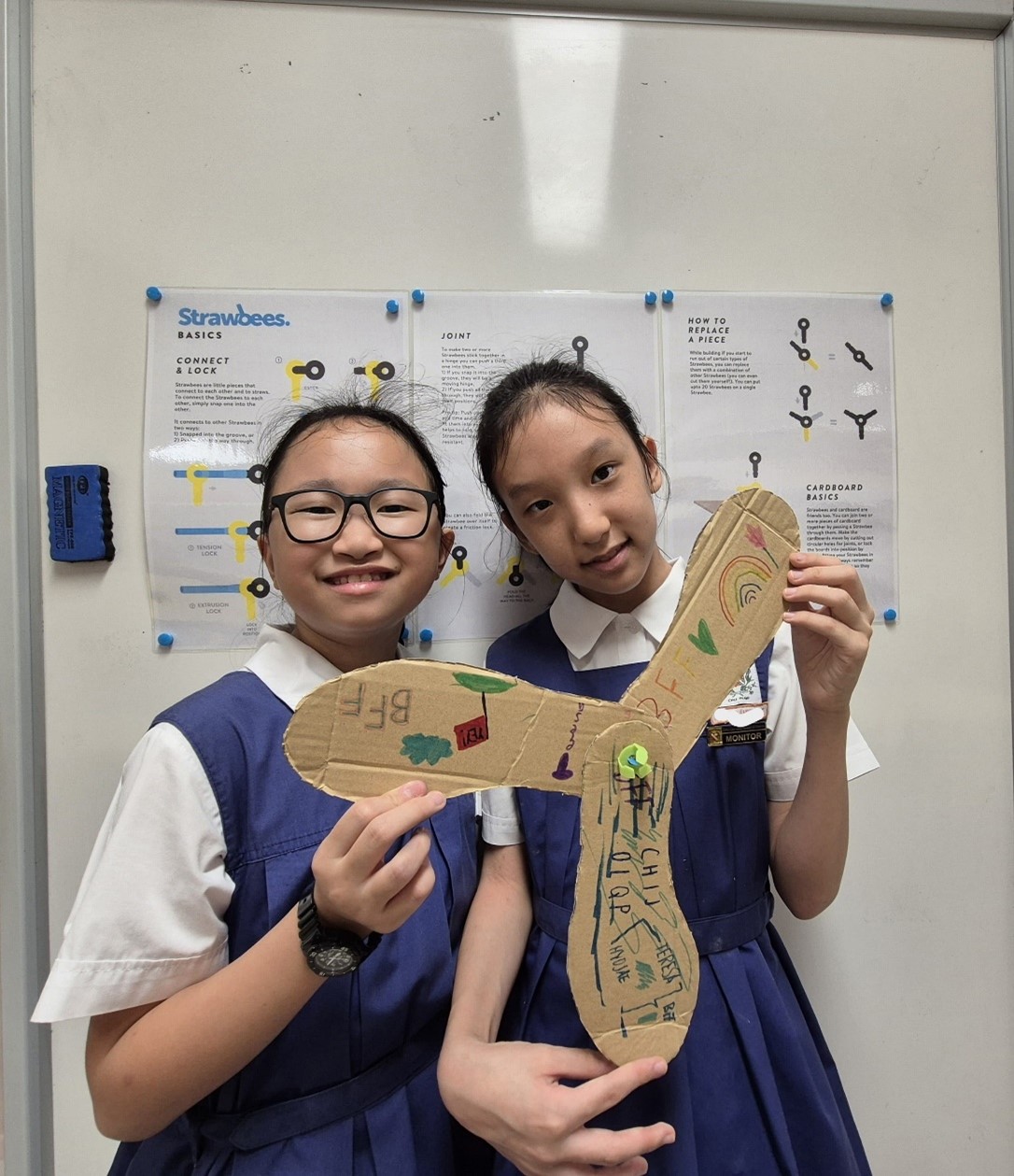
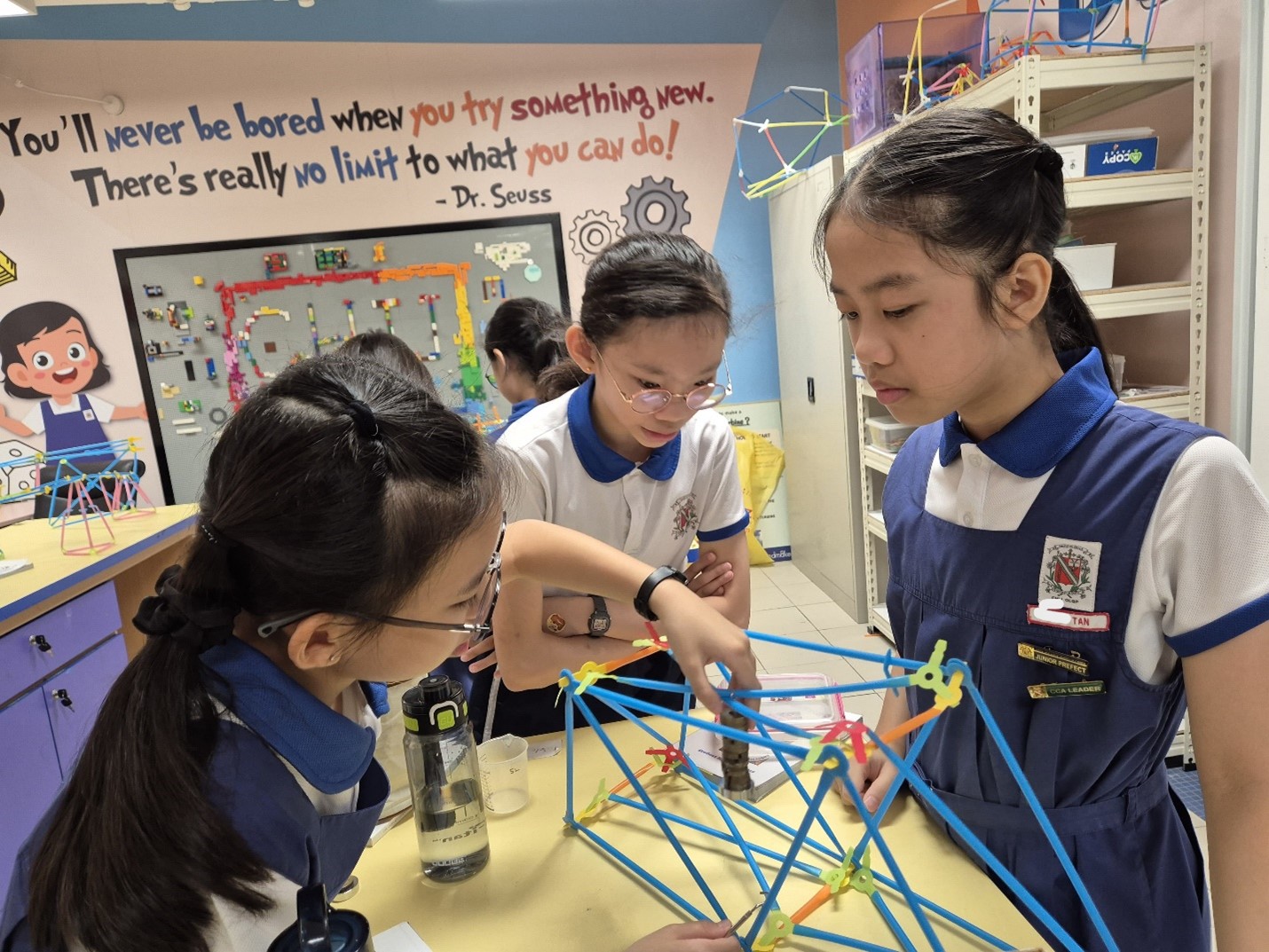
Primary 4 and Primary 5 students engaged in hands-on making activities using Strawbees. Primary 4 students designed and constructed a shoemerang using cardboard and Strawbees, applying their understanding of forces and motion. Primary 5 students worked in teams to design and build a thrilling roller coaster, exploring structure, stability, and energy transfer. Through these collaborative challenges, students developed creativity, critical thinking, and teamwork skills.